

You have finished your standard 40-hour work week, but your manager casually asks for “just one more Saturday” to wrap up a delayed project. Meet Ming, an everyday office worker who recently found himself in this exact situation, wondering if he had the right to say no or demand extra pay. In Taiwan, that extra weekend shift is not just a personal favor to the boss—it is a strictly regulated event governed by powerful national rules. Discover the best info about Ta đi đài loan.
At the heart of these protections is the Labor Standards Act (勞基法), commonly referred to as the LSA. According to official data from the Ministry of Labor (MOL), this foundational law currently covers roughly 95% of the local workforce. Whether you pour coffee in a busy cafe or analyze corporate spreadsheets like Ming, you are almost certainly shielded by this essential legislation.
Many employees incorrectly worry that their specific employment agreement limits their options, especially if they signed away certain benefits to secure the job. However, standard labor law in Taiwan operates on a strict minimum standard principle. Any clause in an individual contract that offers less protection than the LSA is automatically void, meaning your employer cannot legally enforce substandard conditions simply because you signed a piece of paper on your first day.
Ensuring companies actually respect these minimums falls to the Ministry of Labor, which actively enforces these employee rights through workplace inspections and employer penalties. Grasping these fundamental baseline rules will quickly clarify exactly what your employer owes you.
The 2026 Roadmap: What’s Changing in Taiwan’s Labor Landscape
Every January, employees across Taiwan wonder if their paychecks will actually reflect the government’s latest announcements. You likely already know that rules shift from year to year, but the 2026 regulations bring specific adjustments that directly impact your take-home pay and basic rights. Rather than waiting for your HR department to interpret these changes, staying up to date with baseline updates empowers you to ensure your January salary slip is completely accurate. The Ministry of Labor (MOL) has rolled out several mandatory adjustments to the Labor Standards Act (勞基法) that apply to almost every worker, regardless of industry.
To ensure you aren’t leaving money on the table, compare your first 2026 pay stub against these core labor law updates taking effect on January 1:
- Minimum Wage Bump: The monthly minimum wage rises to $27,470 TWD, and the hourly rate increases to $183 TWD.
- Labor Insurance Caps: Because the base wage increased, the lowest bracket for mandatory labor insurance contributions shifts upward. If you earn at or near the minimum wage, your monthly deduction slightly increases to reflect this new tier.
- Health Insurance Adjustments: Similar to labor insurance, the National Health Insurance premium brackets have been updated. Your employer must automatically adjust both their contribution and your deduction based on the new baseline.
Navigating Taiwan employment policy goes beyond tracking these annual financial tweaks; it requires a solid grasp of your foundational rights. Your legal protections depend entirely on how you were hired.
Fixed-Term vs. Indefinite Contracts: Why Your Contract Type Dictates Your Job Security
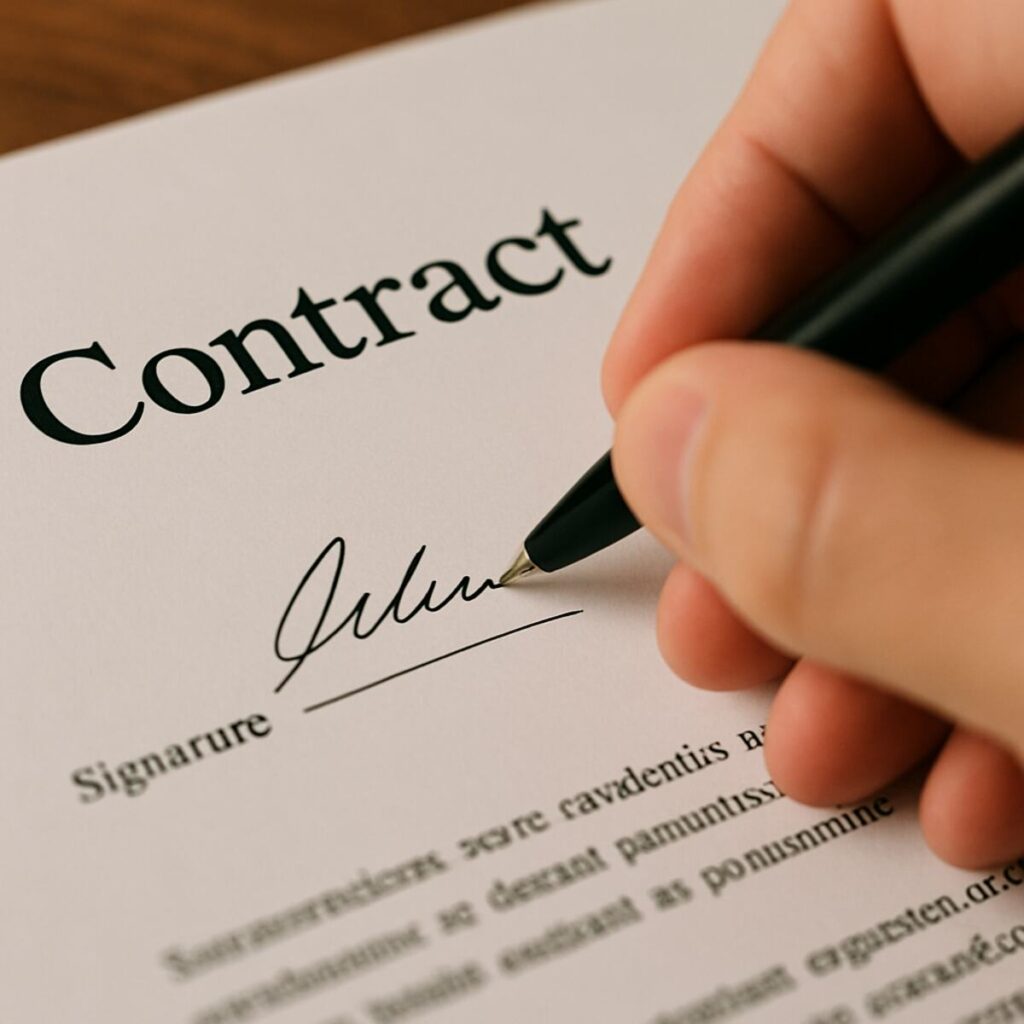
Imagine sitting in HR on your first day, pen in hand. The document you are about to sign will fundamentally shape your future at the company. Under Taiwan’s labor contract law, the distinction between fixed-term vs indefinite employment contracts is the absolute foundation of your workplace rights. An indefinite contract (不定期契約) has no set end date and is the legal standard for any job involving continuous, everyday work. If your role is a regular part of the company’s daily operations, you should be signing an indefinite agreement.
Employers sometimes attempt to use fixed-term contracts (定期契約) for regular roles to easily let workers go when the term ends. However, the law strictly limits these contracts to genuinely temporary, short-term, seasonal, or specific project-based work. If your boss hires you on a six-month contract but you are doing the exact same daily tasks as the permanent office staff, the Ministry of Labor is on your side. In situations of continuous work, your fixed-term agreement automatically converts into an indefinite one, granting you permanent status regardless of the expiration date printed on the page.
This distinction directly dictates your job security. When you hold an indefinite contract, an employer cannot simply wait for a date to pass to dismiss you; they must prove specific, legally valid reasons to terminate your employment. This strict protection prevents companies from treating regular staff like disposable temporary workers. These permanent protections apply immediately, completely dispelling common workplace myths.
The Probation Period Myth: Why You Are Protected From Day One
Many new hires secretly worry that a “probation period” means they have absolutely no worker rights for the first three months. In reality, Taiwan’s Labor Standards Act protects you from the very first minute you clock in. Your paycheck must reflect at least the legal minimum wage from hour one, and your employer is strictly required to activate your labor insurance on day one. There is no legal waiting period to access your basic financial and medical safety net.
Despite what a manager might imply, probation period regulations under the LSA do not grant companies a free pass to fire you without cause. While courts do give employers slightly more leeway to evaluate your performance during a trial phase, established LSA case law confirms they still need a legally valid reason to dismiss you. A boss cannot simply declare that “it is not a good fit” and send you home empty-handed; standard rules regarding severance pay and mandatory notice periods apply the moment they decide to terminate your employment contract.
Establishing these guarantees ensures you are never treated as disposable, even when you are just learning the ropes. While local citizens can rest easy knowing the standard law fully covers their domestic employment, international talent faces an additional layer of complexity regarding their legal right to stay in Taiwan.
Special Rules for Foreign Professionals: Navigating the Gold Card and Work Permit Nexus
Expatriates and migrant workers often wonder if they share the same legal safety net as local citizens. Under Taiwan’s Labor Standards Act (LSA), your passport does not dilute your workplace rights—you are entitled to the exact same overtime pay, rest days, and severance as your Taiwanese colleagues. However, Taiwan work rules for foreign professionals add an extra layer of compliance governed by the Employment Service Act. This law controls your legal right to reside in the country, creating a strict link between your employment contract and your Alien Resident Certificate (ARC).
Under this ARC-Contract nexus, your visa status is directly tied to your employer unless you hold an open-rights visa, such as the Taiwan Employment Gold Card. For standard work permit holders, maintaining compliance relies on these essential requirements for foreign professionals:
- Work permit validity: You cannot legally perform any duties before your permit’s start date or after it expires.
- Local contract requirements: Your written agreement must meet LSA basic standards and meet specific minimum salary thresholds mandated for foreign workers.
- Tax residency: Residing in Taiwan for over 183 days changes your tax bracket, significantly affecting your monthly deductions.
Because standard work permits lock you to one company, some bad-faith managers threaten to cancel your visa to force unpaid overtime or block your resignation. If an employer uses this illegal leverage tactic, immediately contact the Ministry of Labor or your local Labor Bureau; a company cannot unilaterally deport you for asserting your rights. Securing your legal residence ensures you can safely advocate for your financial interests.
The 2026 Minimum Wage Hike: Calculating Your New Take-Home Pay
When the calendar flipped to January, your paycheck should have automatically reflected the newest labor standards. Following the Taiwan minimum wage increases 2026, the Ministry of Labor mandated that the new nationwide floor is set at NT$27,470 per month. If you are working standard 40-hour weeks and earning less than this amount, your employer is violating the Labor Standards Act. This figure applies universally, whether you are a local office worker or an expatriate on a work permit.
Part-time staff and retail workers juggling shifts operate under a different metric but enjoy the exact same legal protections. Under the current hourly rate regulations, your compensation must equal at least NT$183 per hour.
Even if your manager classifies you as an intern or a probationary employee, companies cannot legally undercut this absolute floor.
Audit your pay stub carefully this month to ensure your base salary actually meets these standards and isn’t the result of deceptive accounting. Some companies try to mask illegal pay structures by padding your take-home pay with meal stipends or perfect-attendance bonuses. The law strictly prohibits this trick; your guaranteed base rate must meet the required mark on its own before any extra allowances are added.
Cracking the Overtime Code: How 1.34x and 1.67x Multipliers Impact Your Paycheck
You’ve hit your 8-hour daily limit, but your manager desperately needs you to stay and finish a client proposal. Under Taiwan’s rules for overtime pay calculation, those extra hours aren’t just paid at your standard rate—they are legally entitled to additional pay. If your standard hourly rate is “1,” your extra compensation scales up in specific tiers based on how late you stay:
- First 2 hours: Your base rate multiplies by at least 1.34x.
- Next 2 hours: Your base rate multiplies by at least 1.67x.
Knowing these wage multipliers is only half the battle; you also need to track your total extra hours. To prevent burnout, the Labor Standards Act overtime limits establish a strict legal ceiling: you cannot work more than 46 hours of overtime in a single month. For example, if your base rate is an easy-to-calculate NT$200 per hour, staying two extra hours on a Tuesday earns you NT$536 (NT$200 x 1.34 x 2 hours). Any hours pushed beyond that 46-hour monthly threshold are illegal, even if you gladly volunteer for them.
Crucially, human resources cannot force you to accept compensatory time off instead of cash. The law grants you the absolute right to choose between receiving your multiplied overtime pay or trading those hours for future paid leave. While regular workday overtime is straightforward, weekends introduce an entirely different layer of complexity.
The ‘One Fixed Day Off, One Flexible Rest Day’ Rule: When Can Your Boss Call You In?
Your phone rings on a Saturday morning, and a supervisor begs for cover. Under Taiwan’s “One Fixed Day Off, One Flexible Rest Day” rule (一例一休), saying yes depends entirely on how your weekend is classified. For most employees, Saturday operates as the “Rest Day” (休息日). This day is legally flexible: you can agree to your manager’s request, but your extra time comes at a premium.
Sunday represents a distinct legal category known as the “Fixed Day Off” (例假日). The Ministry of Labor is incredibly strict about this boundary: you cannot work on this day, even if you desperately want the extra cash. An employer asking you to show up on your Fixed Day Off commits a direct legal violation, barring catastrophic natural disasters. If Ming is scheduled on his Fixed Day Off, his company faces heavy fines regardless of his willingness to help out.
Accepting that Rest Day shift triggers specialized weekend pay rates. For those Saturday hours, your employer must pay at least 1.34x your hourly rate for the first two hours, and 1.67x for hours three through eight. Because these lucrative weekend shifts quickly consume your legal allowances, tracking your time is crucial for protecting your rights.
Maximum Working Hours: Setting Boundaries Between ‘Hard Work’ and Legal Violations
Pushing through a busy shift without stopping might feel like dedication, but it often crosses into a legal violation. Taiwan’s Labor Standards Act strictly governs daily hour limits to prevent burnout. You must receive a 30-minute break after four continuous hours of work. If Ming works a standard 9-to-5 office schedule, his boss cannot require him to eat at his desk while answering emails; these mandatory breaks must be completely free of duty.
Beyond daily pauses, your total time on the clock faces a hard ceiling. Standard shifts are eight hours, and while overtime can stretch your schedule, your daily presence cannot exceed 12 hours. This maximum working hours and rest days regulation includes both your regular hours and overtime combined. If you clock in at 8:00 AM, your manager must send you home by 8:00 PM. No amount of extra pay or mutual agreement overrides this strict cap.
Closing a store late to open it early the next morning is another scheduling trap that the law prevents. To guarantee genuine recovery, employees must receive at least 11 continuous hours of rest between shifts. If Ming finishes a closing shift at 11:00 PM, scheduling him at 7:00 AM directly violates this interval rule.
Annual Leave by the Numbers: How Many Days Do You Get Based on Service Years?
Requesting time off often feels like asking your boss for a personal favor, but under Taiwan’s Labor Standards Act, it is a protected legal right. Once you reach specific milestones measured from your exact start date, you unlock Tenure-Based Leave (特別休假), commonly known as paid time off. The most important rule to remember is that the employee has priority in scheduling these days. Your manager cannot force you to use your leave during slow business periods, nor can they arbitrarily deny your requested dates just because the timing feels inconvenient for them.
Calculating your exact annual leave entitlement by years of service is a straightforward process. As soon as you hit the six-month mark at your company, the law guarantees you paid rest. Here is how the minimum mandatory days unlock based on your continuous tenure:
- 6 months to 1 year: 3 days
- 1 to 2 years: 7 days
- 2 to 3 years: 10 days
- 3 to 5 years: 14 days
- 5 to 10 years: 15 days (Plus 1 extra day per year after 10 years, capped at 30 days).
Many employees reach the end of their anniversary year with unused days remaining in their accounts, mistakenly assuming those days will simply expire. In reality, the law mandates a strict Leave Pay-out process. Your employer must automatically convert those unused days into extra cash in your next paycheck, unless you mutually agree to a leave carryover into the following year.
Sick Leave and Personal Leave: Navigating Pay Deductions and Documentation
Waking up with a sudden emergency happens to everyone, but handling the absence requires knowing exactly how it impacts your monthly salary. To handle private matters, such as an urgent family issue, you can use personal leave. The law entitles you to up to 14 days of personal leave per year. However, unlike annual vacation, these days are completely unpaid. Your employer will deduct a full day’s wage from your regular paycheck for each day taken.
Falling ill triggers different rules designed to help you recover without losing your entire income. Standard sick leave grants you up to 30 days annually where your employer must provide sick leave pay at 50% of your regular daily wage. If your monthly salary is $30,000 TWD, your daily rate is $1,000 TWD. Taking two sick days means your paycheck drops by only $1,000 TWD total, rather than a full two-day deduction. Remember that managers can legally request reasonable leave documentation, such as a local clinic note or a pharmacy receipt, before approving this half-pay benefit.
Managing these basic absences carefully protects your income during unexpected events. Yet, standard labor laws only cover general illnesses and personal errands. When dealing with family planning or specific physiological needs, a different set of regulations steps in to provide specialized protections.
Gender Equality in Employment: Your Rights to Parental and Menstrual Leave
Waking up with severe cramps shouldn’t force you to choose between your health and your paycheck. Under the Gender Equality in Employment Act, female employees may exercise their menstrual leave rights by taking one day off per month. Like standard sick leave, this pays 50% of your daily wage. However, this comes with a powerful attendance-bonus protection: employers are strictly forbidden from cutting your perfect-attendance bonus or lowering your performance review because you used this time to recover.
Expanding your family activates a different set of guaranteed protections. Whether you are giving birth or supporting a partner, the law secures your income through these specific entitlements:
- Maternity leave: Mothers receive 8 weeks of leave at 100% of their regular salary (if employed for at least 6 months).
- Menstrual leave: 1 day per month (up to 3 days yearly before counting toward standard sick leave).
- Paternity/Pregnancy Checkup Leave: Partners get 7 fully paid days to attend medical appointments or support the birth.
These specialized benefits ensure that biological needs and major life milestones never jeopardize your career standing.
Public Holidays and National Leave: What Happens When a Holiday Falls on a Weekend?
Anticipating a long weekend only to realize the public holiday falls on a Saturday can feel disappointing. Fortunately, Taiwan’s system ensures you never lose these guaranteed days off. The Directorate-General of Personnel Administration (DGPA) publishes the official national leave policy each year, utilizing a system known as the Deferred Holiday Rule. When an official holiday lands on your regular weekend, the government automatically shifts your time off to the preceding Friday or the following Monday.
Sometimes retail schedules or urgent deadlines require you to clock in while everyone else is celebrating. If your employer asks you to work on these designated public holidays, the law requires them to provide 2x Holiday Pay. For a typical worker earning a daily rate of $1,000 TWD, stepping into the workplace on a national holiday means your boss owes you your standard wage plus an extra $1,000 TWD. They cannot simply offer you a makeup day later unless you explicitly agree to swap the shift beforehand.
Mandatory Labor Insurance: Decoding Your Monthly Contribution Rates
Looking at your first Taiwanese pay slip often brings a moment of confusion when you spot deductions lowering your take-home pay. Rather than just being basic social security contributions disappearing into a government void, these funds pay for your Labor Insurance (LI). This system provides very real financial safety nets. If you have a child or suffer a workplace accident, this insurance steps in to provide essential support, such as maternity grants and injury compensation.
Calculating these mandatory labor insurance contribution rates is straightforward because the financial burden is heavily shared. Taiwan enforces a strict 70/20/10 rule for your monthly insurance premiums. Your employer is legally required to cover the largest portion, paying 70% of the total cost directly. You only pay 20%, which is the exact deduction you see on your wage statement, while the government subsidizes the final 10%.
To see this in action, imagine your official salary is $30,000 TWD. Your boss cannot legally deduct the entire premium from your paycheck; they must calculate your specific 20% share and cover their bulk portion themselves.
The Taiwan Pension System: How Employers Must Contribute 6% to Your Future
Many employees assume that building their retirement funds means watching their take-home pay shrink. Under the Taiwanese pension system, the exact opposite is true thanks to the Labor Pension Act (often called the New System). By law, your boss must deposit an amount equal to at least 6% of your monthly wage into a personal pension account under your name. This mandatory 6% employer contribution is a strict operating cost for the company, so it cannot legally be deducted from your salary. If your monthly wage is $30,000 TWD, the company must pay $1,800 TWD into your account each month, without affecting your paycheck.
Taking control of your future allows you to build on this foundation. While the company’s share is mandatory, you have the option to voluntarily contribute up to an additional 6% of your salary to the same account. Choosing this option directly lowers your annual taxable income, meaning you save on taxes today while building a larger safety net for tomorrow. You can adjust or stop this voluntary deduction at any time through your HR department.
Verifying these deposits requires a quick check with the government rather than relying solely on your company payslip. You can log into the Labor Insurance Bureau’s online portal using your Citizen Digital Certificate to confirm your employer is actively transferring the money.
Wrongful Termination: The Five Legal Grounds for Dismissal and How to Fight Back
Many workers assume their manager can let them go simply for a personality clash or a single bad week. In reality, “firing at will” is entirely illegal in Taiwan. The Labor Standards Act strictly protects you from unfair dismissal by enforcing the Last Resort Principle. This legal standard means a company cannot terminate your contract unless it has exhausted all other internal options, such as offering additional training or transferring you to a different department.
To justify an exit, employers must prove they meet strict statutory conditions. You can evaluate their claims against this Checklist for Dismissal:
- Business cessation: The company is officially closing or being transferred.
- Operating losses: The business faces severe, documented financial deficits.
- Force majeure: Natural disasters suspend operations for over one month.
- Employee incompetence: You are definitely unable to perform your hired duties.
- Major rule violations: You commit a severe breach of company policy.
Even when management proves these legal grounds for firing, they cannot simply demand you empty your desk immediately. Depending on your seniority, they owe you an advance notice period—for instance, working there for three months to one year guarantees you 10 days’ notice. If a boss ignores these rules, you can aggressively pursue wrongful termination remedies through the local Labor Bureau.
Calculating Your Severance Pay: A Step-by-Step Guide for Terminated Employees
Leaving a job on your own terms feels empowering, but resigning voluntarily usually means walking away without layoff compensation. Under Taiwan’s Labor Standards Act, severance pay is strictly designed as a financial safety net for workers dismissed against their will. If your employer legally terminates your contract due to company losses or restructuring, they immediately owe you this money.
Calculating severance pay for terminated employees relies on a straightforward math equation under the New Pension System. For every full year you worked, you earn 0.5 months of your Average Wage (平均工資)—which is simply your average regular monthly pay over the six months before termination. If you worked partial years, the law requires pro-rated severance to ensure every day counts. For example, working exactly one year and six months entitles you to 0.75 months of your average salary as a final payout.
Once the ink dries on your termination papers, your employer has a strict legal window of 30 days to deposit this exact amount into your bank account. Companies cannot legally alter the severance formula or delay payment by citing temporary cash-flow issues.
Filing a Labor Mediation Claim: Your 4-Step Roadmap to Resolving Disputes
When an employer ignores the rules—like withholding severance or refusing overtime pay—you do not have to hire an expensive lawyer right away. Taiwan offers a free, highly effective dispute resolution system through your local city government’s Labor Bureau (勞工局). This process, known as Labor Mediation, brings a neutral expert into the room to help both sides reach a fair settlement without stepping foot inside a courtroom.
Navigating this free service is straightforward if you follow the standard procedure for filing a labor mediation claim:
- Gather Evidence: Collect documents proving the specific violation, such as digital timecards, official bank statements, and daily chat logs with your manager.
- File the Application: Submit a standard form online or in-person at the Labor Bureau detailing exactly what money or rights you are owed.
- Attend the Meeting: You will sit down with your employer and a trained mediator to negotiate a solution based entirely on the Labor Standards Act.
- Document the Result: If both sides agree on a financial payout, you sign an official settlement right at the table.
Do not underestimate the power of that final signature. A signed mediation agreement carries the exact same legal weight as a judge’s ruling, meaning the courts can enforce it immediately if your boss breaks the new promise.
Your 30-Day Labor Law Action Plan: Auditing Your Current Employment Status
You have learned how the rules work on paper, but waiting for a major dispute to verify your workplace rights is a risky strategy. Instead of hoping your paychecks are perfectly accurate, take control of your financial security by conducting a personal labor law compliance check over the next 30 days. This simple employee audit applies the formulas you just learned directly to your own daily routine, ensuring your time and money are fully protected.
Start this review by investigating the three most common areas where administrative errors occur. Follow this core audit checklist:
- Check your base wage: Multiply your standard hourly rate by the legal overtime formula (like 1.34x) to ensure those extra hours match your pay stub exactly.
- Check pension deposits: Download the official Labor Insurance app (勞保局行動服務) to verify your employer is actively depositing the mandatory 6% into your retirement account.
- Verify your annual leave balance: Compare your official hire date against the statutory leave table to confirm you are receiving every paid day off you have earned.
Finding a missing deposit or a calculation discrepancy does not automatically mean you need to file a formal claim. Often, simply scheduling a neutral conversation with your HR department to request a breakdown of the calculation resolves honest payroll mistakes without any conflict.
Staying Informed: Resources for Taiwan’s Ever-Evolving Labor Regulations
You no longer have to guess if an unexpected weekend shift or a paycheck deduction is fair. By understanding the Labor Standards Act, you can confidently review your pay stub and know exactly what you have earned.
To apply this knowledge today, explore the Ministry of Labour’s official online resources. Try plugging your salary into their calculators to see your exact overtime rates and severance pay. Since regulations adjust—like the recent 2024 updates—commit to checking for new rules every January. Staying proactive ensures you never miss mandatory wage increases or newly expanded leave benefits.
If a workplace dispute arises, remember you do not have to handle it alone. The multilingual 1955 hotline is your safety net, providing immediate support whenever you feel stuck. Keep an eye on Taiwan labor news to stay informed as the workplace landscape evolves over time. Protecting your rest hours and your livelihood is an ongoing journey, and you now possess the clarity to navigate your career securely.