


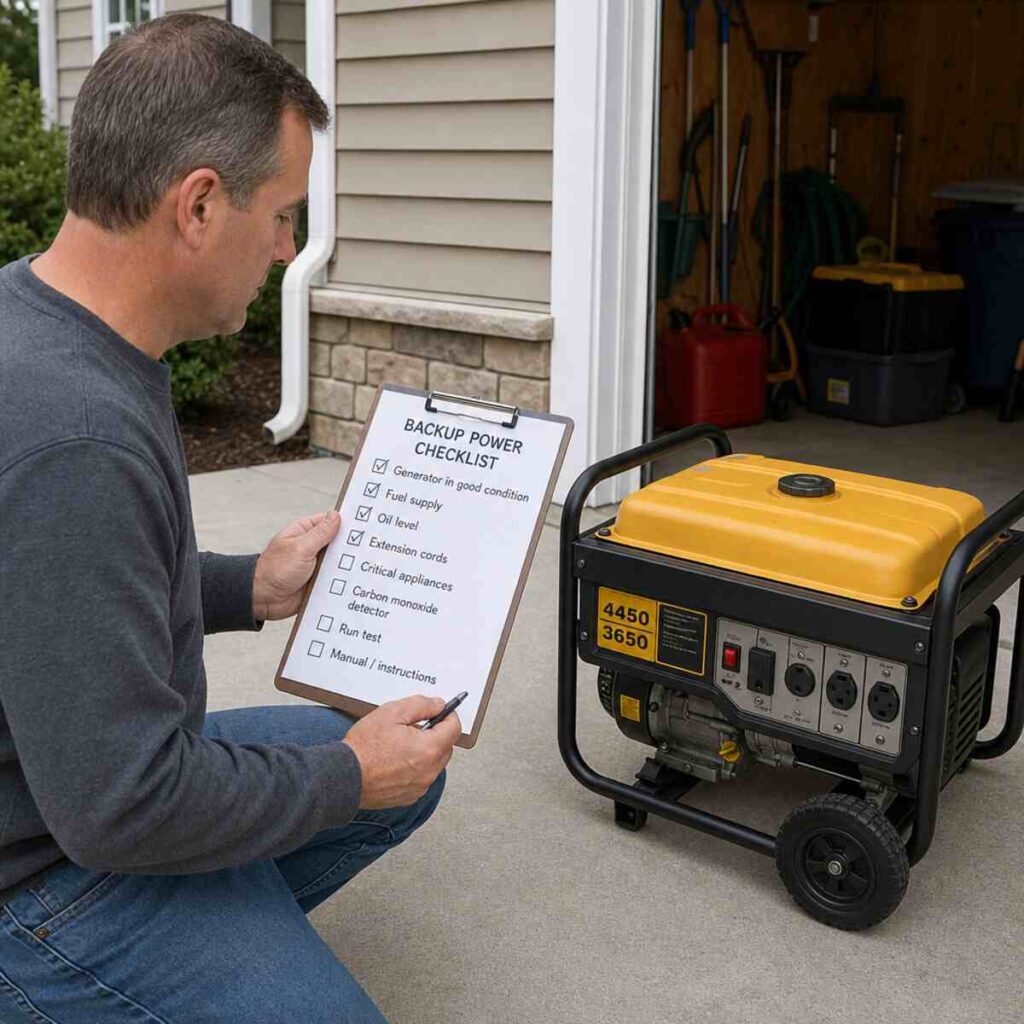
Power outages are no longer rare inconveniences for many U.S. homeowners. Between storms, grid strain, wildfire-related shutoffs, ice, wind, and aging infrastructure, backup power has become less of a luxury and more of a household resilience tool. Pick out the best generator for hurricane season.
But here is the first truth every smart buyer should know: the right generator is not simply the biggest one you can afford.
The best choice is the one that safely powers what matters, uses fuel you can realistically store or access, connects to your home correctly, and keeps running when conditions are messy. If you are comparing the best home generators for power outages, focus less on flashy marketing claims and more on the features that determine safety, usability, and long-term reliability.
This guide walks through the essential features to evaluate before you buy, with practical examples for real households.
Start With Your Outage Plan, Not the Generator
Before you compare models, decide what kind of outage you are planning for.
A generator meant to keep a refrigerator, router, and a few lights running during a short summer outage is very different from one expected to power a well pump, furnace blower, sump pump, freezer, and selected kitchen circuits for several days.
Ask yourself:
- Do you want to power a few appliances with extension cords?
- Do you want to power selected circuits through your electrical panel?
- Do you need 240-volt power for a well pump, central air conditioner, electric range, or certain tools?
- Do you need automatic backup power when you are away from home?
- How long do outages typically last in your area?
- Which appliances protect health, food, heat, cooling, security, or basement flooding?
A clear outage plan keeps you from overspending on capacity you will never use or undersizing a unit that struggles the moment a pump or compressor starts.
Think of the generator as the engine. Your outage plan is the map.
Sizing: Running Watts vs. Starting Watts
Generator sizing begins with two numbers: running watts and starting watts.
Running watts are the watts an appliance needs once it is operating normally. A refrigerator, for example, uses a certain amount of power to keep running after the compressor is already on.
Starting watts, sometimes called surge watts, are the extra watts required for a brief moment when a motor-driven appliance starts. Refrigerators, freezers, sump pumps, furnace blowers, window air conditioners, well pumps, and many power tools can require much more power at startup than they use while running.
This is where many homeowners miscalculate. They add up only the running watts, buy a generator that looks large enough, and then discover that it bogs down or trips when a pump kicks on.
A better approach:
- List every item you want to power.
- Find each item’s running wattage from the label, manual, or manufacturer specifications.
- Identify which items have motors or compressors.
- Add the largest starting watt requirement to your total running watt load.
- Add a cushion so the generator is not operating at maximum output all the time.
For example, your essentials might include:
- Refrigerator
- Freezer
- Gas furnace blower
- Sump pump
- Internet modem and router
- Several LED lights
- Phone charging
- Microwave used occasionally
That may sound modest, but the sump pump and refrigerator may both create startup surges. If you also have a well pump, the need can jump significantly. For home generators for power outages, a sizing mistake is not just inconvenient. It can shorten equipment life, create nuisance shutdowns, and leave critical loads unsupported.
A wise rule: size for what must start, not just what must run.
Do Not Oversize Without a Reason
Bigger is not always better.
An oversized portable generator may use more fuel, produce more noise, cost more upfront, and be harder to move. A large standby generator may require a larger gas line, a more involved installation, and higher maintenance costs.
That does not mean you should buy the smallest model possible. It means you should buy based on a realistic load plan.
For many households, the best fit is one of these strategies:
- Essential-load strategy: Power only critical appliances and circuits.
- Comfort strategy: Add selected conveniences, such as microwave, TV, extra lighting, or small air conditioning.
- Whole-home strategy: Use a properly installed standby system or large portable setup that can handle most household loads, often with load management.
If your home uses electric heat, central air, electric water heating, or an electric range, whole-home generator sizing becomes more complex. At that point, a licensed electrician or generator installer should calculate loads and determine whether load-shedding controls are needed.
Fuel Type: Choose What You Can Actually Use During an Outage
Fuel type is one of the most important decisions because it affects runtime, storage, maintenance, cost, and convenience.
Gasoline
Gasoline-powered portable generators are common, widely available, and often offer strong wattage for the price. They are familiar to most homeowners and easy to refuel when stations are open.
The downside is storage. Gasoline degrades over time, must be stored safely in approved containers, and may be hard to find during widespread emergencies. Gasoline engines also require more attention to stale fuel, carburetor issues, and safe refueling.
Gasoline may be a good fit if:
- You want a portable generator for occasional outages.
- You can rotate stored fuel responsibly.
- Your outage plan is measured in hours or a day or two.
- You are comfortable with small-engine maintenance.
Propane
Propane stores longer than gasoline and is often cleaner from a maintenance standpoint because it does not gum up carburetors the same way gasoline can. Many homeowners already store propane for grills, patio heaters, or rural home systems.
The tradeoff is that propane often produces slightly less power than gasoline on the same dual-fuel generator, and runtime depends on tank size and temperature conditions. Small grill cylinders may run out quickly under heavier loads.
Propane may be a good fit if:
- You want easier long-term fuel storage.
- You already have propane tanks on-site.
- You prefer cleaner storage and less fuel rotation.
- You are planning for moderate essential loads.
Dual-Fuel
Dual-fuel generators typically run on gasoline or propane. This flexibility is valuable because outages rarely unfold exactly as planned. If gasoline is unavailable, propane may keep you going. If propane supply is limited, gasoline gives you another option.
For many homeowners shopping for generators for power outages, dual-fuel capability is one of the most practical features available. It does not eliminate fuel planning, but it gives you options when supply chains are strained.
Look for:
- Clear wattage ratings for each fuel type
- Easy fuel switching
- Secure hose connections
- Regulator quality
- Simple startup on both fuels
Natural Gas
Natural gas is common for standby generators and some tri-fuel portable models. The big advantage is convenience: if your gas utility remains operational, you do not need to store large quantities of fuel on-site.
The limitation is installation. Natural gas connections must be properly sized, permitted where required, and installed by qualified professionals. Not every home’s existing gas meter or piping can support a large generator without upgrades.
Natural gas may be a good fit if:
- You want automatic standby power.
- Your home already has natural gas service.
- You prefer not to store fuel.
- You are willing to invest in professional installation.
Diesel
Diesel generators are known for durability and fuel efficiency under heavy loads, especially in larger applications. They are less common for typical residential portable backup than gasoline, propane, or natural gas units, but they can make sense for certain rural, agricultural, or high-demand situations.
Diesel may be a good fit if:
- You need sustained power for heavier loads.
- You already store diesel safely for equipment.
- You prioritize engine longevity.
- Noise, cost, and weight are acceptable tradeoffs.
For most U.S. homeowners, the practical shortlist is gasoline, propane, dual-fuel, tri-fuel, or natural-gas standby. The best fuel is the one you can safely obtain, store, and use when the grid is down.
Inverter vs. Conventional Generators
The next major choice is generator technology.
Conventional Generators
Conventional portable generators use an engine running at a set speed to produce power. They are often cost-effective and available in higher wattages. If you need to power pumps, refrigerators, heaters, and rugged household loads, a conventional generator may be perfectly adequate.
Strengths include:
- More watts for the money
- Broad availability
- Strong performance for motor loads
- Simple, proven designs
Tradeoffs include:
- More noise
- Higher fuel use at lighter loads
- Less refined power quality compared with many inverter models
- Heavier frames and larger footprints
Inverter Generators
Inverter generators produce AC power, convert it, and deliver cleaner, more stable output. They often adjust engine speed based on load, which can reduce noise and improve fuel efficiency. They are popular for electronics, camping, RVs, and increasingly for home backup.
Strengths include:
- Cleaner power for sensitive electronics
- Quieter operation in many models
- Better fuel efficiency at lower loads
- Compact options available
Tradeoffs include:
- Higher cost per watt
- Lower maximum output in many smaller models
- Repairs may be more specialized
If your outage plan includes laptops, networking gear, TVs, battery chargers, medical devices, or smart-home equipment, inverter power is worth considering. If your priority is maximum wattage for essential household loads, a conventional model may still be the better value.
The sweet spot for many homeowners is a larger inverter generator or dual-fuel inverter generator paired with a safe transfer method.
Runtime and Fuel Efficiency
Runtime is not just a convenience feature. It determines how often you must refuel, how much fuel you need to store, and whether you can sleep through the night without waking up to refill the tank.
Manufacturers often list runtime at partial load, commonly around half load. That number is useful, but it is not the whole story. A generator running near maximum capacity will burn fuel faster. A lightly loaded inverter generator may run longer because it can throttle down.
When comparing runtime, look for:
- Runtime at 25 percent, 50 percent, and rated load if available
- Tank size
- Fuel consumption rate
- Eco-mode or load-sensing throttle
- Propane consumption estimates
- Ability to connect to larger approved fuel tanks where appropriate
For long outages, fuel efficiency becomes the quiet hero. A generator that burns less fuel while powering the same essential loads can reduce stress, storage needs, and late-night refueling.
Also consider your refueling routine. Portable generators should be turned off and allowed to cool before refueling, and fuel should be handled outdoors away from ignition sources. Carbon monoxide and fire risks rise when people rush or improvise during emergencies. The CDC warns that portable generators produce carbon monoxide, and the CPSC emphasizes that generators should be operated outside and far from the home, never indoors or in a garage. (cdc.gov)
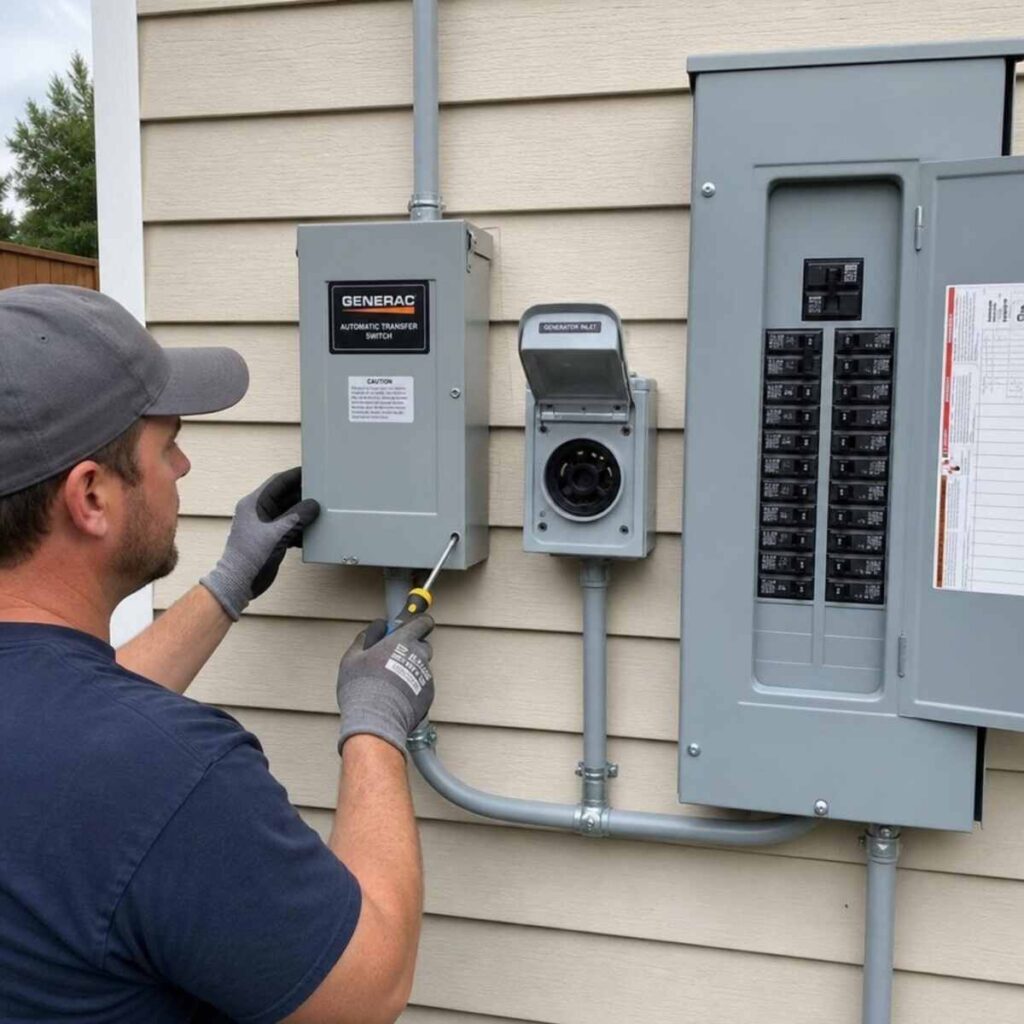
Transfer Switches, Interlocks, and Safe Connection
If you want to power hardwired home circuits, such as a furnace blower, well pump, sump pump circuit, or selected lighting circuits, you need a safe way to connect the generator to your electrical system.
That usually means one of these:
- Manual transfer switch: Lets you switch selected circuits from utility power to generator power.
- Generator interlock kit: Works with a compatible electrical panel to prevent the main breaker and generator breaker from being on at the same time.
- Automatic transfer switch: Used with standby generators to sense an outage, start the generator, and transfer power automatically.
The goal is to prevent backfeeding, which can send generator power onto utility lines and create serious danger for utility workers, neighbors, and your own electrical equipment. The CDC notes that an improperly sized, installed, or operated portable generator can send power back into electrical lines, a hazard commonly called backfeed. (archive.cdc.gov)
Never connect a generator to a home through a dryer outlet, range outlet, or homemade cord. That is not clever. It is dangerous.
For a homeowner, the feature to look for is not only the generator’s outlet panel. It is whether the generator is compatible with a code-compliant inlet, transfer switch, or interlock setup installed by a licensed electrician. Electrical requirements vary by jurisdiction, and optional standby systems are addressed in electrical-code interpretations such as NEC Article 702 guidance used by authorities having jurisdiction. (ncosfm.gov)
120/240-Volt Capability and Outlet Selection
Not every generator can power the same types of loads.
Most small portable generators provide 120-volt outlets for standard household plugs. Larger portable generators may provide both 120-volt and 240-volt output. That matters if you need to power equipment such as:
- Well pumps
- Some sump pump systems
- Central air conditioning equipment
- Electric water heaters
- Certain shop tools
- Some transfer switch or interlock configurations
Look closely at the outlet panel. Useful features may include:
- Standard 120-volt household receptacles
- 120/240-volt twist-lock outlet
- 30-amp or 50-amp receptacle, depending on generator size
- Weather-protected outlet covers
- Clearly labeled breakers
- GFCI protection where applicable
- USB ports for small electronics, if helpful
A common mistake is buying a generator with enough wattage on paper but the wrong outlet configuration for the intended connection. If your electrician plans to install a 30-amp inlet, the generator needs the correct matching output. If your home requires 240 volts for a well pump, a 120-volt-only generator will not solve the problem.
Match the outlets to the plan, not the other way around.
Surge Protection and Power Quality
Generators can expose appliances to voltage fluctuations, especially when loads start and stop. Sensitive electronics may not appreciate rough power.
Look for features such as:
- Automatic voltage regulation
- Low total harmonic distortion ratings when available
- Inverter technology for cleaner output
- Overload protection
- Circuit breakers on the control panel
- Surge protection for connected electronics
For whole-home or selected-circuit use, discuss surge protection with your electrician. A panel-level surge protective device can help protect appliances and electronics from certain transient voltage events, though it is not a cure-all for poor generator sizing or improper connection.
If you work from home, rely on networking equipment, or have expensive electronics, do not treat power quality as an afterthought. In many cases, the best home generators for power outages are not merely the ones with high wattage. They are the ones that deliver appropriate, stable power for the loads you actually care about.
Carbon Monoxide Safety Shutoff
Carbon monoxide safety is non-negotiable.
Portable fuel-burning generators produce carbon monoxide, a gas you cannot see or smell. The CPSC warns that portable generators pose a serious carbon monoxide hazard and should be used outside only, far from the home. The CDC also advises keeping generators outdoors and away from doors, windows, and vents. (cpsc.gov)
A CO safety shutoff is a feature that detects dangerous carbon monoxide levels near the generator and shuts the unit down or prevents it from continuing to run. This feature is now common on many newer portable generators and should be treated as essential.
However, do not let a CO shutoff create false confidence. It is a backup safety feature, not permission to run a generator in a garage, shed, porch, breezeway, basement, or near an open window.
When evaluating CO safety, look for:
- Automatic CO shutoff sensor
- Clear warning lights or fault indicators
- Compliance with recognized portable-generator safety standards when stated by the manufacturer
- Instructions that clearly explain safe placement
- Battery-powered CO alarms inside the home, especially near sleeping areas
A generator can be powerful, efficient, and beautifully built, but if it is unsafe around carbon monoxide, it is the wrong generator.
Grounding and Neutral Bonding
Grounding is one of the most misunderstood generator topics. It is also one of the reasons a licensed electrician is worth involving.
Some portable generators are designed with the frame serving as the grounding means under specific conditions. OSHA explains that a portable generator frame may serve as the grounding electrode when the generator supplies only equipment mounted on the generator or cord-and-plug-connected equipment through receptacles mounted on the generator, with grounding terminals bonded to the frame. (osha.gov)
But once you connect a generator to a home’s wiring system through transfer equipment, neutral bonding and grounding requirements may change depending on the generator design and transfer equipment. Some generators have a bonded neutral. Others have a floating neutral. Some transfer switches switch the neutral. Others do not.
This is not a place for guesswork.
Before buying, ask:
- Does the generator have a bonded neutral or floating neutral?
- Is it compatible with the transfer switch or interlock plan?
- Does the manual explain grounding requirements clearly?
- Will the setup meet local electrical code?
- Will a licensed electrician verify the installation?
Grounding is not about checking a box. It is about fault protection, shock prevention, and making sure safety devices operate as intended.
Noise Level and Decibel Ratings
Generator noise matters more than many buyers expect.
A loud generator may be tolerable for an hour. After two days, it can become a neighborhood issue, a sleep issue, and a stress issue. Some communities, HOAs, and local ordinances also restrict noise levels or operating hours.
Generator noise is usually listed in decibels, often measured at a specific distance and load. When comparing dB ratings, remember:
- Lower numbers are quieter.
- Decibels are logarithmic, so a small numerical increase can feel significant.
- Inverter generators are often quieter, especially at lower loads.
- Open-frame conventional generators are often louder.
- Load level affects noise.
- Placement, barriers, and terrain affect perceived sound.
Look for:
- Published dB rating
- Quiet muffler design
- Eco-mode or variable engine speed
- Enclosed inverter design if quiet operation is a priority
- Rubber feet or vibration isolation
Do not place a generator closer to the home just to reduce noise. Carbon monoxide safety and exhaust direction come first. If noise is a major concern, choose a quieter generator rather than using unsafe placement to solve a sound problem.
Portability vs. Standby Power
Homeowners usually choose between portable and standby generators, though there are many variations within each category.
Portable Generators
Portable generators are moved into place during an outage, started manually or electrically, and connected to appliances or a home inlet depending on the setup.
They are often best for:
- Lower upfront cost
- Essential-load backup
- Flexibility
- Occasional use
- Homeowners comfortable with setup and refueling
Features to prioritize include:
- Wheels and fold-down handles
- Manageable weight
- Electric start with recoil backup
- Fuel gauge
- Covered outlets
- CO shutoff
- 120/240-volt capability if needed
- Compatible outlet for transfer equipment
The hidden question is whether you can move it safely in bad weather. A “portable” generator that weighs more than 200 pounds may not feel portable on gravel, snow, mud, or a sloped driveway.
Standby Generators
Standby generators are permanently installed outside the home, usually connected to natural gas or propane, and paired with an automatic transfer switch. They can start automatically when utility power fails.
They are often best for:
- Automatic operation
- Longer outages
- Larger household loads
- Homeowners who travel
- Medical or accessibility needs
- Convenience and peace of mind
Features to prioritize include:
- Proper professional sizing
- Automatic transfer switch
- Weather-resistant enclosure
- Load management options
- Exercise cycle
- Remote monitoring
- Local service support
- Strong warranty
Standby systems cost more and require professional installation, but they remove much of the manual work required by portable units.
Weather Resistance and Outdoor Operation
Generators must run outdoors, but they also need protection from rain, snow, and wind-driven moisture. That creates a practical challenge: the generator needs ventilation and safe exhaust clearance, yet electrical components should not be exposed to unsafe wet conditions.
Look for:
- Weather-resistant outlet covers
- Durable frame or enclosure
- Corrosion-resistant materials
- Clear manufacturer guidance for wet-weather operation
- Compatible generator tent, canopy, or running cover if approved
- Stable footing for outdoor placement
Never improvise by running a generator inside a garage, shed, crawlspace, or enclosed porch to keep it dry. CPSC guidance is clear that portable generators should not be operated indoors or in a garage. (cpsc.gov)
A good buying plan includes the generator and the safe operating location. Ask yourself where it will sit, how the cord will run, how exhaust will be directed, and how you will protect it from weather without trapping fumes.
Maintenance and Serviceability
A generator is emergency equipment. It needs to start after months of sitting.
That makes maintenance features extremely important.
Look for:
- Easy oil access
- Clearly marked dipstick and drain
- Accessible air filter
- Accessible spark plug
- Fuel shutoff valve
- Carburetor drain or easy fuel draining
- Hour meter
- Maintenance reminders
- Battery access for electric-start models
- Readily available replacement parts
- Clear owner’s manual
For gasoline models, stale fuel is one of the most common causes of starting problems. If you choose gasoline, plan to use stabilizer when recommended, rotate fuel, exercise the generator, and store it according to the manual.
For propane and natural gas models, maintenance may be simpler in some respects, but oil changes, air filters, spark plugs, batteries, and periodic testing still matter.
A generator that is easy to maintain is more likely to be maintained. That means it is more likely to work when the lights go out.
Warranty and Local Support
A generator warranty is only as useful as the support behind it.
Before buying, check:
- Warranty length for residential use
- What parts are covered
- Whether labor is included
- Whether commercial use changes coverage
- Availability of authorized service nearby
- Parts availability
- Customer support reputation
- Whether the brand has local dealers or mobile service options
This is especially important for standby generators. Installation quality, annual service, warranty work, and parts access all affect the ownership experience.
For portable models, local support still matters. If your generator fails during storm season, waiting weeks for parts can turn a bargain into regret.
Smart Monitoring and Convenience Features
Smart features are not essential for every household, but they can make generator ownership easier.
Useful convenience features include:
- Electric start
- Remote start
- Battery charging port
- Fuel gauge
- Hour meter
- Load meter
- Low-oil shutdown
- Overload indicator
- CO shutdown indicator
- App-based monitoring
- Maintenance alerts
- Standby generator exercise notifications
For standby systems, smart monitoring can alert you to maintenance needs, failed exercise cycles, low battery conditions, or faults. For portable generators, Bluetooth or app monitoring may help you track load and runtime without standing next to a running engine.
Do not pay for smart features at the expense of core safety and capacity. But once the basics are right, convenience features can make the generator easier to use correctly under stress.
Final Buying Checklist
Use this checklist before choosing among home generators for power outages.
Power and sizing
- I listed the appliances and circuits I want to power.
- I identified both running watts and starting watts.
- I accounted for pumps, compressors, and motor loads.
- I added a reasonable capacity cushion.
- I confirmed whether I need 120 volts only or 120/240 volts.
Fuel
- I chose a fuel type I can realistically store or access.
- I understand runtime at expected load.
- I have a safe fuel storage plan.
- I know how often I may need to refuel.
- I considered dual-fuel or tri-fuel flexibility.
Connection
- I know whether I will use extension cords, a transfer switch, an interlock, or a standby transfer switch.
- I will not backfeed through an appliance outlet.
- I confirmed outlet compatibility with my planned inlet or switch.
- I will use a licensed electrician for panel-connected setups.
Safety
- The generator has CO safety shutoff if portable.
- I have working CO alarms in the home.
- I have a safe outdoor location far from openings.
- I understand grounding and neutral bonding must match the connection method.
- I have weather protection that does not create exhaust hazards.
Usability
- I can move the generator if it is portable.
- The noise level is acceptable for my property.
- Maintenance points are accessible.
- Parts and service are available.
- The warranty is clear.
- Smart monitoring or electric start features support my real use case.
Example Scenarios
Scenario 1: Basic essentials during short outages
A homeowner wants to power a refrigerator, freezer, phone chargers, a few LED lights, modem, router, and an occasional microwave.
A moderate portable generator or inverter generator may be enough. Key features include low fuel consumption, CO shutoff, manageable weight, covered outlets, and enough starting watts for refrigeration loads. If the homeowner does not need hardwired circuits, heavy-duty extension cords rated for generator use may be the simplest setup.
Best-fit features:
- Inverter or efficient portable model
- Gasoline, propane, or dual-fuel
- CO shutoff
- Low noise
- Easy start
- Good runtime at partial load
Scenario 2: Sump pump, furnace, and refrigerator
This household needs heat, refrigeration, and basement flood protection. Because the furnace and sump pump may be hardwired or located away from convenient outlets, a manual transfer switch or interlock with a proper inlet may be appropriate.
Best-fit features:
- Enough starting watts for pump and blower loads
- 120/240-volt capability if required by the transfer setup
- 30-amp outlet or other electrician-specified receptacle
- Manual transfer switch or listed interlock kit
- CO shutoff
- Strong runtime and fuel plan
Scenario 3: Rural home with a well pump
A rural homeowner needs water, refrigeration, heat, and basic lighting. The well pump may require 240 volts and significant starting wattage.
Best-fit features:
- 120/240-volt generator
- Higher starting-watt capacity
- Transfer switch or interlock installed by an electrician
- Dual-fuel or large fuel-storage plan
- Durable frame and weather-resistant outlet covers
- Clear grounding compatibility
Scenario 4: Automatic backup for frequent outages
A homeowner travels often or has medical, accessibility, or security concerns. Manual setup is not ideal.
A standby generator may be the better choice. It can start automatically, run on natural gas or propane, and power selected circuits or much of the home depending on size and load management.
Best-fit features:
- Professional load calculation
- Automatic transfer switch
- Natural gas or propane supply
- Weather-resistant enclosure
- Smart monitoring
- Local service support
- Strong warranty
Scenario 5: Work-from-home household
This household needs internet, computers, refrigeration, lighting, and perhaps a small HVAC solution. Power quality and noise matter.
Best-fit features:
- Inverter generator or standby system with stable output
- Surge protection strategy
- Quiet operation
- Long runtime at partial load
- Transfer switch for selected circuits
- Smart load monitoring
The Bottom Line
The best generator is not defined by one number on the box. It is defined by how well it fits your outage plan.
For most homeowners, the right choice balances capacity, fuel, connection method, safety, runtime, noise, maintenance, and support. If you remember only one principle, make it this: buy the generator system, not just the generator.
That system includes the unit, the fuel plan, the transfer equipment, the outdoor operating location, the CO alarms, the cords or inlet, the maintenance routine, and the people who know how to use it.
When comparing the best home generators for power outages, choose the model that can safely power your true essentials, start your hardest loads, run efficiently on fuel you can access, and connect to your home the right way. That is how you turn backup power from a stressful purchase into a dependable plan.