

If you have recently booked your very first Brazilian wax, or you are simply considering making the leap, you are likely experiencing a mix of excitement and apprehension. Stepping into a salon to have hair removed from your most intimate areas is a vulnerable experience, and wondering about the pain level, the preparation, and the aftermath is completely normal. Select the Brazilian wax Napervile.
However, with the right knowledge and preparation, this highly popular grooming choice can be transformed from a nerve-wracking ordeal into a straightforward, routine part of your self-care regimen.
This comprehensive guide is designed to walk you through every single aspect of the process. From understanding the nuances of different hair removal methods to mastering your post-waxing skincare routine, we are going to dive deep into what it takes to have a flawless, comfortable experience. Let’s demystify the process so you can walk into your appointment with absolute confidence.
Chapter 1: Understanding the Basics
Before you lay down on the esthetician’s table, it is essential to understand exactly what you are signing up for. The world of intimate grooming has its own vocabulary, and knowing what to ask for ensures you get the exact results you desire.
What Exactly is a Brazilian Wax?
A Brazilian wax involves the complete removal of hair from the pelvic region, the vulva, the perineum, and the anal area. While the classic Brazilian leaves you completely bare from front to back, many salons allow you to customize the service. You can opt to leave a small “landing strip,” a triangle, or a square of hair on the front while still having all the hair underneath and in the back removed.
Brazilian Wax vs. Bikini Wax
It is common for first-timers to confuse a Brazilian wax with a bikini wax, but the two services cater to entirely different goals.
- The Bikini Wax: A standard bikini wax simply cleans up the sides and the top of the pubic area. It removes only the hair that would typically be visible when wearing a standard bikini bottom.
- The Brazilian Wax: As mentioned, this takes everything off (or nearly everything), going much deeper into the intimate areas, including the labia and the buttocks crease.
Full Pubic Hair Removal Benefits
Why do millions of people subject themselves to this process every month? The full pubic hair removal benefits are numerous. First and foremost, many people enjoy the heightened sense of cleanliness and freshness, especially during warmer months or menstrual cycles. Additionally, waxing eliminates the prickly stubble associated with shaving, reduces the occurrence of razor burn, and acts as a powerful form of physical exfoliation, leaving the skin incredibly soft and smooth. Over time, consistent waxing damages the hair follicle in a positive way, causing the hair to grow back finer, softer, and much sparser.
Chapter 2: Exploring Your Hair Removal Options
When it comes to intimate grooming, waxing is not the only game in town. Understanding how different methods stack up against one another will help you validate your choice to wax, or perhaps lead you to a specific type of wax.
Shaving vs Waxing Bikini Line Comparison
The most common alternative to waxing is shaving. In a shaving vs waxing bikini line comparison, waxing almost always wins out for long-term satisfaction. When you shave, you are taking a sharp blade and slicing the hair off directly at the skin’s surface. This leaves a blunt edge on the hair shaft, which feels sharp and prickly as soon as it begins to grow back—usually within 24 to 48 hours. Shaving the bikini area also drastically increases the risk of micro-cuts, razor bumps, and severe hyperpigmentation due to the friction of the blade.
Waxing, on the other hand, pulls the hair entirely out by the root. When a new hair forms and grows back, it has a naturally tapered, soft tip, meaning you will not experience that itchy, prickly phase.
Sugaring Hair Removal vs Traditional Waxing
You may have seen “sugaring” on a salon menu and wondered how it differs from traditional waxing. When looking at sugaring hair removal vs traditional waxing, the primary differences lie in the ingredients and the technique.
- Sugaring: This ancient technique uses a paste made entirely of natural ingredients: sugar, lemon juice, and water. The esthetician molds the paste against the direction of hair growth and flicks it off in the direction of hair growth. Many people find this causes less breakage.
- Traditional Waxing: Traditional wax is applied in the direction of hair growth and pulled off against it. While both methods are highly effective and yield similar long-lasting results, some people with highly reactive skin prefer sugaring for its simple ingredient list.
Hard Wax vs Soft Wax for Sensitive Skin
If you opt for traditional waxing, your esthetician will likely use either hard wax, soft wax, or a combination of both.
- Soft Wax: This requires a cloth or paper strip. The esthetician applies a thin layer of warm wax, presses a strip over it, and pulls. Soft wax adheres to both the hair and the top layer of dead skin. It is excellent for larger areas like the legs, but can be too aggressive for the delicate bikini area.
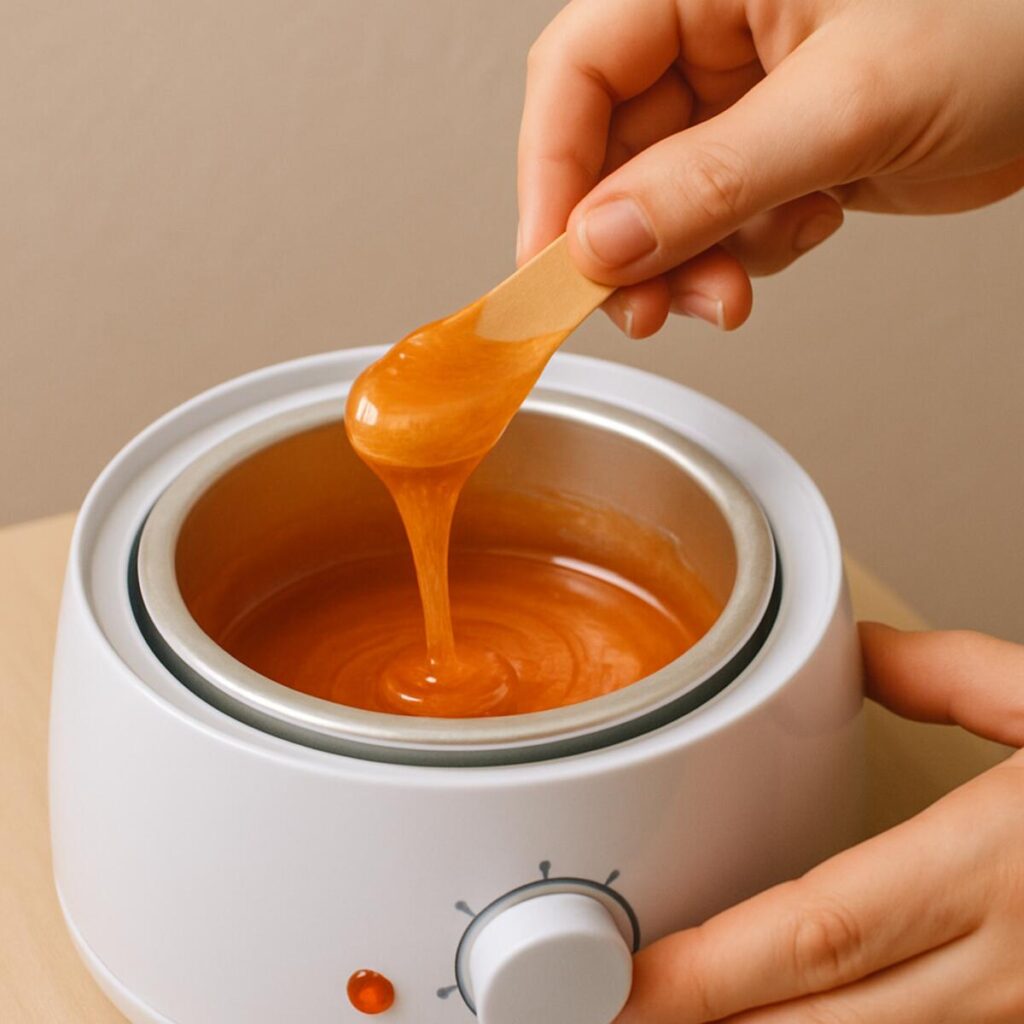
- Hard Wax: For intimate areas, hard wax is the gold standard. When considering hard wax vs soft wax for sensitive skin, hard wax is the clear winner. This wax is applied in a thicker layer and allowed to cool and harden on the skin. As it cools, it “shrink-wraps” around the hair itself, rather than adhering to the skin. The esthetician then uses the wax itself as the strip to pull the hair out. This results in significantly less skin trauma, reduced redness, and a much more comfortable experience for the client.
Chapter 3: The Science of Hair Regrowth
A common question among first-timers is: “Is this going to be worth the time, money, and brief discomfort?” To answer that, we must look at the science of your hair.
Pubic Hair Regrowth Stages
Understanding how your hair grows is crucial for managing your expectations. Hair does not grow in one uniform cycle; instead, it goes through three distinct pubic hair regrowth stages:
- Anagen (The Growth Phase): This is the active growing phase. The hair is firmly rooted in the follicle and attached to the blood supply. Pulling hair out during this phase yields the longest-lasting results, as the follicle has to completely rebuild the hair from scratch.
- Catagen (The Transitional Phase): The hair detaches from the blood supply and stops growing, but remains in the follicle.
- Telogen (The Resting/Shedding Phase): The hair rests in the follicle until it is eventually pushed out by a new anagen hair growing beneath it.
At any given moment, the hairs on your body are in different phases. This is why you cannot wax once and expect total perfection forever. During your first wax, the esthetician will remove all the hair visible on the surface. However, there are likely microscopic hairs in the early Anagen phase lurking just below the skin that the wax cannot grab.
How Long Does Hair Stay Smooth After Waxing?
Because of these overlapping growth cycles, your very first wax might not stay perfectly smooth for as long as you hope. Typically, you might start to feel slight, soft regrowth after about a week and a half. So, how long does hair stay smooth after waxing once you are on a consistent schedule? If you wax regularly every 4 to 6 weeks, you synchronize your hair growth cycles. By your third or fourth consecutive wax, the vast majority of your hair will be growing at the same time, allowing you to enjoy a completely smooth, hair-free period of 2 to 3 weeks before sparse regrowth begins.
Chapter 4: Preparing for Your First Appointment
The secret to a successful, relatively painless, and highly effective Brazilian wax lies entirely in what you do in the days leading up to your appointment.
Let It Grow
The golden rule of waxing is ensuring your hair is the correct length. Your hair needs to be at least 1/4 inch long—roughly the length of a grain of rice. If it is too short, the wax will not be able to grip the hair, and the esthetician will not be able to remove it from the root. If you have been shaving, you will need to put the razor down for an absolute minimum of two to three weeks before your appointment. Do not worry if you think the hair is “too long.” Estheticians are equipped with professional trimmers and will trim the hair to the optimal length if necessary.
Pre-Waxing Exfoliation Tips
A well-exfoliated skin surface allows the wax to adhere perfectly to the hair and prevents breakage. Here are some essential pre-waxing exfoliation tips:
- Start Early: Begin gently exfoliating the bikini area two to three days before your appointment.
- Choose the Right Exfoliant: Avoid harsh, jagged physical scrubs (like crushed walnut shells or heavy salt scrubs) which can cause micro-tears. Instead, opt for a gentle sugar scrub or an exfoliating mitt. Alternatively, a gentle chemical exfoliant containing lactic acid can help dissolve dead skin cells without friction.
- The 24-Hour Rule: Cease all exfoliation 24 to 48 hours before your wax. Exfoliating too close to your appointment can leave your skin overly sensitive and prone to tearing when the wax is applied.
Hydration and Diet
Healthy, hydrated skin releases hair much more easily than dry, brittle skin. In the days leading up to your wax, drink plenty of water and apply a gentle, unscented moisturizer to your bikini area daily (but skip the moisturizer on the actual day of your appointment).
Additionally, consider your caffeine and alcohol intake. While it might be tempting to have a glass of wine or a strong cup of coffee to calm your nerves before you head to the salon, stimulants actually restrict your blood vessels and can heighten nerve sensitivity, making the wax feel more painful. Stick to water or herbal tea on the day of your appointment.
Chapter 5: Managing the Pain and Anxiety
Let’s address the elephant in the room: pain. Having hair removed from its root in a highly sensitive area is not going to be a completely painless sensation. However, it is almost never as bad as your imagination makes it out to be. The discomfort is a quick, sharp sting that dissipates within seconds.
How to Reduce Pain During Hair Removal
There are several proactive steps you can take to minimize discomfort. First, consider timing your appointment wisely. Your pain tolerance drops significantly during the days immediately leading up to your menstrual cycle due to fluctuating hormones and increased blood flow to the pelvic region. The optimal time to get a wax is roughly one week after your period ends, when your pain threshold is at its highest.
Taking an over-the-counter anti-inflammatory, such as Ibuprofen, about 30 to 45 minutes before your appointment can help take the edge off and reduce post-wax swelling. Avoid Aspirin, as it can thin the blood and increase the likelihood of pinpoint bleeding (which is a perfectly normal, though alarming-looking, reaction to root hair removal).
Numbing Cream for Bikini Area
For those with profound anxiety or an incredibly low pain tolerance, utilizing a numbing cream for bikini area preparation is a viable option. These creams typically contain lidocaine, which temporarily desensitizes the nerve endings in the skin. If you choose to use a numbing cream, apply a thick layer to the pubic area roughly 30 to 45 minutes before your appointment, and cover it tightly with plastic wrap to help it absorb into the skin rather than rubbing off on your clothes. Crucial note: You must thoroughly wash or wipe away all traces of the numbing cream before the waxing begins. If there is any greasy residue left on the skin, the wax will simply slide off the hair, rendering the treatment ineffective. Always inform your esthetician if you have applied a numbing product.
The Power of Breathing
Never underestimate the power of deep, controlled breathing. When we are nervous or anticipating pain, our natural instinct is to tense our muscles and hold our breath. This actually amplifies the sensation of pain. Practice taking a deep breath in as the esthetician applies the wax, and exhaling forcefully as they pull the strip. A good esthetician will coach you through this breathing pattern.
Chapter 6: The Salon Experience: Step-by-Step
Walking into the salon for the first time can feel intimidating. Knowing exactly what is going to happen behind closed doors is the best way to manage first-time intimate hair removal expectations.
Professional Salon Sanitation Standards
The very first thing you should observe when you walk into a waxing room is the cleanliness of the environment. Professional salon sanitation standards are non-negotiable, particularly when dealing with intimate areas where the risk of bacterial transfer is high. Look for the following green flags:
- No Double Dipping: This is the golden rule of waxing. The esthetician should use a brand new wooden spatula for every single dip into the wax pot. Dipping a used stick back into the communal pot contaminates the entire batch of wax with bacteria, skin cells, and bodily fluids. If you see an esthetician double-dip, you are completely within your rights to halt the service and leave.
- Clean Linens and Gloves: The waxing bed should be lined with fresh, medical-grade paper or freshly laundered towels. Your esthetician must wear a fresh pair of disposable gloves throughout the entire procedure.
- Sanitized Tools: Any tweezers or scissors used should be pulled from a sterile, sealed pouch or a barbicide jar.
Undressing and Positioning
Once you are in the private waxing room, the esthetician will ask you to undress from the waist down, provide you with a cleansing wipe to freshen up, and step out of the room or turn around to give you privacy. You will hop onto the table and typically cover yourself with a small towel or drape provided.
When the esthetician is ready to begin, they will guide you into the proper positions. The most common position is the “butterfly”—lying on your back, knees bent, and the soles of your feet touching, allowing your knees to fall outward. To access the backside, you may be asked to pull your knees to your chest, or to roll over onto your stomach. Remember, estheticians do this dozens of times a day; they are professionals looking at your skin and hair, not judging your body.
The Waxing Process
The actual process is remarkably fast.
- Cleansing: The esthetician will cleanse the area to remove surface oils, sweat, and lotions.
- Pre-Wax Oil/Powder: They may apply a light dusting of powder or a specialized pre-wax oil to protect the skin and help the wax adhere only to the hair.
- Application and Removal: Working in small patches, they will apply the warm wax, allow it to set, and pull it away swiftly. A skilled esthetician will immediately apply firm pressure to the freshly waxed skin with their hand; this pressure instantly confuses the nerve endings and dramatically reduces the stinging sensation.
- Tweezing: Once the waxing is complete, the esthetician will use sterile tweezers to pluck any stray hairs that were too short or stubborn for the wax to grab.
- Soothing: Finally, they will apply a soothing serum, aloe vera, or calming oil to reduce redness and inflammation.
Chapter 7: Special Circumstances
Life doesn’t always pause for your beauty appointments, and sometimes you have to navigate special circumstances.
Waxing While on Your Period Tips
A frequent concern is what to do if Mother Nature arrives just in time for your salon visit. The good news is that you absolutely do not have to cancel. Salons are completely equipped to handle this. If you need waxing while on your period tips, the most important one is to wear a fresh tampon or a menstrual cup to your appointment. Let your esthetician know beforehand; they will simply have you tuck the string out of the way.
As mentioned earlier, keep in mind that your pain sensitivity is naturally heightened during menstruation, so the wax may feel more intense than usual. You may want to take an Ibuprofen beforehand and practice extra deep breathing.
Pregnancy and Waxing
Many pregnant individuals opt for a Brazilian wax as their bellies grow and they can no longer see or reach their bikini area to shave. Waxing is generally considered safe during pregnancy, but the surge in hormones and increased blood flow can make the skin more sensitive and prone to swelling. Always consult with your OB-GYN before scheduling an appointment, and inform your esthetician how far along you are so they can adjust your positioning for maximum comfort.
Chapter 8: The First 48 Hours: Post-Waxing Skincare
Congratulations, you survived the wax! Now, the true test begins: how you treat your skin in the immediate aftermath. Your hair follicles are completely wide open and highly susceptible to bacteria, heat, and friction. Implementing a strict post-waxing skincare routine for the first 48 hours is crucial for preventing breakouts, infections, and discomfort.
What to Avoid
For the first two days after your appointment, your mantra should be “cool, calm, and clean.”
- No Intense Workouts: Avoid heavy sweating, which can carry bacteria into the open follicles and cause painful pimples or folliculitis.
- No Extreme Heat: Skip hot baths, saunas, steam rooms, and tanning beds. Stick to lukewarm or cool showers.
- No Friction: Wear loose-fitting, breathable cotton underwear and clothing. Tight leggings or synthetic lace can rub against the sensitized skin and cause severe irritation.
- No Intimacy: It is highly recommended to abstain from sexual activity for at least 24 to 48 hours, as friction and bodily fluids can easily irritate the newly waxed skin and introduce bacteria.
Soothing Skin Irritation Naturally
It is entirely normal for the skin to be pink, tender, and dotted with tiny red bumps immediately following a Brazilian wax. This is known as histamine reaction, and it usually subsides within a few hours to a day. For soothing skin irritation naturally, look for pure, calming ingredients.
- Aloe Vera: Pure aloe vera gel (kept in the refrigerator for an extra cooling effect) is excellent for taking the heat out of the skin.
- Witch Hazel: Alcohol-free witch hazel acts as a gentle astringent, reducing inflammation and keeping bacteria at bay.
- Cold Compresses: A clean cloth soaked in cold water or cold chamomile tea can be pressed gently against the area to reduce swelling and redness.
- Avoid Heavy Fragrances: Do not apply heavily scented lotions, perfumes, or chemical deodorants to the area, as these will burn and cause dermatitis.
Chapter 9: Long-Term Maintenance and Troubleshooting
Once you make it past the initial 48-hour recovery period, your focus shifts to maintaining your smooth results and preparing your skin for the next growth cycle.
Preventing Ingrown Hairs After Waxing
Ingrown hairs occur when a growing hair curls back on itself and re-enters the skin, or when dead skin cells clog the follicle, forcing the hair to grow sideways beneath the surface. Because waxing causes hairs to grow back finer and weaker, they sometimes lack the strength to push through the skin’s surface, making ingrown hairs a common complaint.
Preventing ingrown hairs after waxing requires a dedicated, consistent routine centered around exfoliation and hydration.
- Begin Exfoliating on Day 3: Wait until 48 to 72 hours have passed since your wax, and then begin exfoliating the bikini area 2 to 3 times a week.
- Physical vs. Chemical Exfoliants: While a gentle scrub or a dry brush can manually sweep away dead skin cells, chemical exfoliants are often more effective for the bikini line. Look for toners, pads, or serums containing Alpha Hydroxy Acids (AHAs) like glycolic or lactic acid, or Beta Hydroxy Acids (BHAs) like salicylic acid. These ingredients dissolve the “glue” that holds dead skin cells together, keeping the follicle clear so the fine hairs can grow out easily.
- Moisturize Daily: Exfoliating without moisturizing will leave your skin dry, tight, and tough, which actually causes ingrown hairs. Apply a lightweight, non-comedogenic lotion or a specialized pubic oil every day after you shower to keep the skin supple and soft. Ingredients like jojoba oil, tea tree oil (in low dilutions), and grapeseed oil are excellent choices.
When to Rebook
To maintain the benefits of synchronized hair growth and weakened hair follicles, consistency is key. You should aim to schedule your maintenance waxes every 4 to 6 weeks. Resist the urge to pick up a razor between appointments! Shaving even once will blunt the ends of the hair, disrupt the growth cycle you have worked hard to synchronize, and bring you right back to square one in terms of pain and results at your next wax.
Chapter 10: Frequently Asked Questions for First-Timers
Even with a wealth of information at your fingertips, you may still have some lingering questions. Let’s address some of the most common concerns first-timers have before booking their Brazilian wax.
Will I be judged by my esthetician?
Absolutely not. It is vital to remember that estheticians are licensed professionals who look at bodies anatomically. To them, your bikini area is simply skin and hair. They have seen every shape, size, skin tone, and hair type imaginable. Their primary focus is on removing the hair efficiently and safely, not evaluating your body.
Can I get a Brazilian wax if I am plus-sized?
Yes, waxing is for every body. A skilled esthetician knows how to navigate different body types and will guide you into positions that stretch the skin taut, which is necessary for a clean, safe wax. If you have mobility issues or concerns about positioning, communicate openly with your esthetician so they can accommodate you comfortably.
What happens if I get an erection during the wax?
For clients with penises booking a male-anatomy Brazilian (sometimes called a Manzilian), it is common to worry about physical reactions. An involuntary physiological response to touch and temperature is entirely normal, and professionals are trained to ignore it and continue the service professionally.
Is it normal to have bruising after a wax?
While minor redness and pinpoint bleeding are normal, actual bruising is not ideal. Bruising typically occurs if the skin was not held taut enough during the pull, or if the client was extremely tense. If you experience severe bruising, you may want to ensure your skin is heavily hydrated before your next visit, or consider seeking out a different esthetician with a firmer technique.
How do I choose the right salon?
Do your research. Look for salons that specialize heavily in waxing rather than nail salons that offer waxing as an afterthought. Read reviews, check their social media for glimpses of their sanitation practices, and do not be afraid to call the front desk to ask about the type of wax they use (remember, hard wax is preferred for the bikini area) and their double-dipping policy.
Conclusion
Embarking on the journey of your first Brazilian wax is a rite of passage in the world of personal grooming. While the anticipation is often nerve-wracking, understanding the mechanics of hair removal, knowing exactly how to prepare your skin, and familiarizing yourself with professional salon standards will empower you to walk into that room with confidence.
By committing to a solid pre-waxing exfoliation routine, managing your expectations regarding pain and regrowth, and religiously following your post-waxing skincare routine, you will ensure a smooth, comfortable, and long-lasting result. Remember, the first wax is always the hardest. Stick with it, ditch the razor, maintain your 4-to-6-week schedule, and you will soon reap the long-term benefits of incredibly soft skin and sparse, fine hair. Take a deep breath—you are going to do great!