

In today’s fast-paced, digitally-driven business landscape, growing a company requires more than just a great product or a dedicated sales team. It requires strategic financial foresight. For decades, the luxury of having a Chief Financial Officer (CFO) to provide this foresight was reserved exclusively for large corporations with deep pockets. Small to medium-sized enterprises (SMEs) were often left to navigate complex financial waters with only a bookkeeper or a traditional tax accountant. Check out usfractionalcfo.com to know more
However, the modern business world has undergone a massive paradigm shift. Enter the fractional CFO—a highly experienced financial executive who provides part-time, high-level strategic guidance to growing businesses.
But hiring a financial expert is only half the equation. To truly unlock their value, businesses and consultants are turning to specialized technology, specifically a Fractional CFO Portal. This digital hub bridges the gap between raw financial data and actionable business strategy.
In this comprehensive guide, we will explore the immense benefits of utilizing fractional CFO services, how technology is reshaping part-time executive work, and actionable strategies for leveraging modern financial tech stacks to scale your enterprise.
1. What is a Fractional CFO?
Before diving into the technology that powers them, it is crucial to understand what a fractional CFO actually is. A fractional CFO is an experienced financial executive who partners with businesses on a part-time, retainer, or contract basis. They offer the same level of expertise, strategic planning, and financial oversight as a full-time CFO, but at a “fraction” of the cost and time commitment.
Sometimes referred to as an outsourced CFO, these professionals step in to help businesses navigate critical transition phases. Whether a company is preparing for a Series A funding round, struggling with cash flow bottlenecks, or trying to optimize its profit margins, an outsourced financial leader provides the high-level roadmap required to achieve those goals.
The Evolution of the Finance Leader
Historically, accountants and bookkeepers were tasked with recording history—logging expenses, managing payroll, and filing taxes. They look backward. A CFO, on the other hand, looks forward. They ask questions like:
- If we hire five new sales reps this quarter, how will it impact our cash runway in six months?
- Should we lease or buy our new manufacturing equipment?
- How can we restructure our debt to improve liquidity?
Today, thanks to remote work technology and the gig economy expanding into the C-suite, businesses do not need to spend $250,000+ a year to get answers to these questions.
2. The Core Benefits of Hiring a Fractional CFO
Why are so many modern businesses opting for fractional financial leadership? The advantages extend far beyond simple cost savings. Here is a deep dive into the primary benefits of bringing a fractional CFO onto your team.
Massive Cost Savings and ROI
The most obvious benefit is financial. A full-time CFO commands a hefty salary, plus bonuses, equity, benefits, and severance packages. For a scaling SME, this overhead is often unjustifiable. By utilizing part-time executive talent, businesses can access top-tier financial minds for a predictable monthly fee. Furthermore, reducing overhead with part-time executive tools and automated portals means that your fractional CFO spends fewer billable hours on manual data entry and more time on high-yield strategic planning.
Objective, High-Level Financial Strategy
Because an outsourced CFO operates slightly outside the daily office politics of your company, they provide an objective, unbiased perspective. They are not bogged down by operational bias. Their primary focus is the financial health and strategic trajectory of your business. They analyze profit centers, identify wasteful spending, and create robust financial forecasts that align with your overarching business goals.
Navigating Mergers, Acquisitions, and Fundraising
If you are planning to raise capital, acquire a competitor, or sell your business, having a CFO is non-negotiable. Institutional investors, venture capitalists, and banks require rigorous financial modeling and reporting. A fractional CFO speaks the language of investors. They can build the necessary financial models, prepare the due diligence documentation, and even sit in on pitch meetings to answer complex financial inquiries.
Crisis Management and Cash Flow Stabilization
Many businesses do not realize they need a CFO until they hit a wall. Perhaps rapid growth has outpaced cash collections, leading to a liquidity crisis. A fractional CFO can immediately implement turnaround strategies, renegotiate vendor terms, optimize accounts receivable, and establish a firm grip on cash flow to steer the company away from the edge of the cliff.
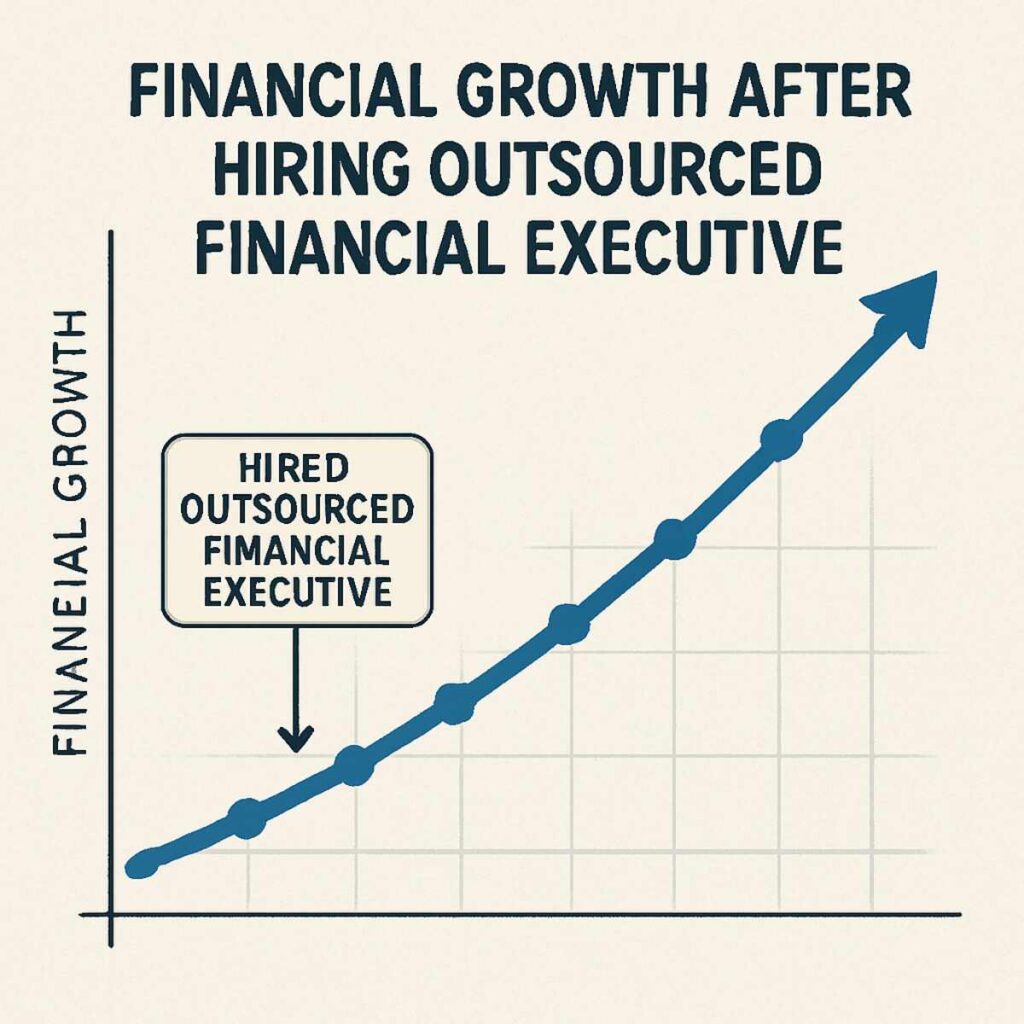
3. Enter the Fractional CFO Portal: A Game Changer
While the expertise of a fractional executive is invaluable, their effectiveness is deeply tied to the tools they use. Because these professionals work part-time and often remotely, seamless integration with your company’s data is critical. This is where the Fractional CFO Portal comes into play.
A Fractional CFO Portal is a secure, centralized digital platform used by financial consultants and business owners to collaborate, share data, and visualize financial health in real time. It acts as the command center for your company’s financial strategy.
Why is a Dedicated Portal Necessary?
In the past, outsourced financial work was highly fragmented. The business owner would email spreadsheets, the bookkeeper would grant temporary access to accounting software, and the CFO would manually combine these data points to build a report in Excel. This process was slow, prone to human error, and entirely inefficient.
By setting up a client collaboration hub for finance, the modern fractional CFO centralizes operations. A dedicated portal allows for secure document sharing, asynchronous communication, automated data syncing, and interactive reporting. It ensures that the business owner and the financial advisor are always looking at the exact same data, at the exact same time, regardless of their physical locations.
4. Virtual CFO Software vs Traditional Accounting Tools
To truly appreciate the power of a dedicated portal, one must understand the debate of virtual cfo software vs traditional accounting tools.
Many business owners mistakenly believe that their existing accounting software (like QuickBooks, Xero, or Sage) is sufficient for a CFO’s needs. While these tools are phenomenal for general ledger management, invoicing, and tax prep, they fall short in strategic forecasting.
Traditional Accounting Tools: The Rearview Mirror
Accounting platforms are inherently historical. They tell you exactly what happened up until yesterday. They categorize expenses, reconcile bank statements, and generate standard Profit & Loss (P&L) statements. They are the foundation of financial management, but they are not the architect of the future.
Virtual CFO Software: The GPS and Headlights
Virtual CFO software connects directly to your traditional accounting tools via APIs to pull historical data, but then it applies forward-looking logic.
- Scenario Planning: What happens to our cash flow if our primary supplier raises prices by 15% next month? Virtual CFO software can model this instantly.
- Non-Financial Metric Integration: Traditional accounting tools do not track website traffic, customer acquisition cost (CAC), or employee turnover. CFO software can integrate these operational metrics to provide a holistic view of the company.
- Visual Storytelling: Instead of staring at rows of numbers, business owners are presented with dynamic, color-coded graphs that highlight trends, warnings, and opportunities.
In short, traditional tools are for compliance; virtual CFO software is for performance.
5. What Features Do Top Financial Advisory Platforms Need?
If you are an agency offering fractional services, or a business owner looking to hire one, it is vital to know what technology is driving the engagement. Not all portals are created equal. So, what features do top financial advisory platforms need to be truly effective?
Here is a breakdown of the non-negotiable features that should be present in a robust tech stack.
1. Cloud-Based Financial Management Dashboard
The heart of any portal is a cloud-based financial management dashboard. This is the first thing the business owner and the CFO see upon logging in. It provides an at-a-glance overview of the company’s financial health. A high-quality dashboard is highly customizable, allowing the CFO to pin the most critical metrics—like gross margin, net income, and operating cash flow—to the top of the screen. Because it is cloud-based, it offers 24/7 access from anywhere in the world, ensuring decision-makers are never left in the dark.
2. Real-Time Cash Flow Monitoring System
Cash is the oxygen of any business. A delayed invoice or an unexpected expense can cause serious operational hiccups. Therefore, a real-time cash flow monitoring system is a paramount feature. This system should not only show current cash balances across all banking institutions but also project future cash balances based on expected accounts receivable and accounts payable. This allows the CFO to identify cash flow gaps weeks or months before they actually occur, providing ample time to secure a line of credit or adjust spending.
3. Predictive Financial Modeling Integration
A top-tier portal must look toward the future. Predictive financial modeling integration allows the CFO to build dynamic rolling forecasts. By utilizing machine learning algorithms and historical trend data, the software can predict future revenues and expenses with impressive accuracy. Furthermore, it allows for “what-if” scenario testing. If the company wants to launch a new product line, the predictive model can instantly map out the required upfront capital and the projected break-even point.
4. Automated KPI Tracking for Small Businesses
Key Performance Indicators (KPIs) vary wildly depending on the industry. A SaaS company cares about Monthly Recurring Revenue (MRR) and Churn Rate, while a manufacturing business cares about Inventory Turnover and Cost of Goods Sold (COGS). The portal should feature automated kpi tracking for small businesses, pulling data automatically from various operational software to calculate these metrics daily. This eliminates the tedious task of manual calculation and ensures that performance tracking is always up-to-date.
6. Overcoming Data Chaos: Solving Data Fragmentation in Financial Planning
One of the most persistent hurdles in modern business management is data silos. Your sales team works in Salesforce or HubSpot; your HR team uses Gusto or Deel; your marketing team spends ad budget through Google Ads and Meta; and your bookkeeping happens in Xero.
When financial data is scattered across half a dozen platforms, gaining a unified view of your company’s health is nearly impossible. This fragmentation leads to conflicting reports, delayed decision-making, and strategic paralysis.
A high-quality Fractional CFO Portal addresses this by solving data fragmentation in financial planning. Through robust API integrations, the portal acts as a central aggregator. It ingests the sales pipeline data from the CRM, payroll liabilities from the HR software, and ad spend from marketing platforms, merging it all with the general ledger.
This centralization is vital. It allows the CFO to see the true Customer Acquisition Cost (CAC) by cross-referencing marketing spend with closed-won CRM deals and actual revenue collected in the accounting software. By eliminating silos, the CFO can provide insights based on the whole truth of the business, rather than a fragmented piece of it.
7. How to Automate Outsourced CFO Reporting
One of the primary reasons fractional CFOs can offer their services at a fraction of the cost of a full-time employee is through the aggressive use of automation. If an outsourced CFO spends ten hours a month manually typing data into a spreadsheet to create a report, they have to bill you for those ten hours. If they can automate that process, those billable hours can be reallocated toward actually interpreting the data and advising you on strategy.
Here is a practical look at how to automate outsourced cfo reporting within a modern portal:
Step 1: Standardize Chart of Accounts (CoA)
Automation fails if the foundational data is messy. The CFO will first work with your bookkeeper to clean up and standardize your Chart of Accounts. Consistent categorization of expenses and income is required for software algorithms to accurately sort and analyze data.
Step 2: Establish Direct API Connections
Instead of relying on manual CSV exports, the portal must be directly linked to your accounting software, bank accounts, and operational tools (like POS systems or CRMs) via APIs. This ensures that data flows into the reporting portal in real time, without human intervention.
Step 3: Define Custom Reporting Templates
Every business is different. The CFO will set up customized reporting templates within the software. Once built, these templates act as a mold. As new data flows in daily, the portal automatically populates the report.
Step 4: Schedule Automated Deliveries
Instead of the business owner asking, “Where are the end-of-month financials?”, the portal can be programmed to automatically generate and email the reporting package on a specific day of the month, or trigger an alert inside the client hub when the latest data is ready for review.
Step 5: Implement Exception Reporting
Automated reporting isn’t just about regular monthly statements; it is also about real-time alerts. The CFO can set thresholds within the software. For example, if travel expenses exceed the monthly budget by 10%, or if cash reserves drop below a 30-day runway, the system automatically flags this anomaly and alerts both the CFO and the business owner.
8. Delivering Value: Optimizing Board-Ready Financial Reports Online
For growing companies, particularly those backed by venture capital, private equity, or a board of directors, the presentation of financial data is just as important as the data itself. Board members and investors do not want to sift through a 40-page black-and-white spreadsheet. They want clear, concise, visually appealing narratives that highlight key metrics, variances from the budget, and forward-looking strategies.
Optimizing board-ready financial reports online is a major value-add of utilizing a fractional CFO portal.
Interactive Presentations over Static PDFs
Instead of sending a static PDF via email, modern CFO portals allow for live, interactive reporting links. During a board meeting, if an investor asks, “What makes up this spike in marketing software expenses in Q2?”, the CFO can click directly on that graph within the online portal, drill down into the underlying transactional data, and answer the question instantly. This level of transparency builds immense trust with investors.
White-Label Financial Reporting for Consultants
From the perspective of the financial professional, branding is essential. The best portals offer white-label financial reporting for consultants. This allows the fractional CFO or financial advisory firm to strip away the software company’s branding and replace it with their own logo, color scheme, and custom domain.
When a client logs into the portal or receives a board-ready report, they see a highly professional, branded experience that reinforces the premium nature of the fractional CFO’s services. It elevates the perceived value of the advisory work and creates a sticky, professional relationship between the consultant and the client.
9. Building the Best Tech Stack for Part-Time Finance Directors
Technology is the leverage that allows a single fractional executive to successfully manage the finances of multiple companies simultaneously. Constructing the best tech stack for part-time finance directors requires a thoughtful blend of accounting, visualization, and communication tools.
Here is what an elite tech stack looks like:
The Foundation: Cloud Accounting
Everything starts with a robust, cloud-based general ledger. Platforms like QuickBooks Online, Xero, or NetSuite are essential. They serve as the undisputed source of truth for all historical transactional data.
The Brain: The Fractional CFO Portal (FP&A Software)
Financial Planning and Analysis (FP&A) software acts as the brain of the operation. Tools like Fathom, Jirav, Syft Analytics, or custom-built CFO portals connect to the cloud accounting foundation. This is where the magic happens—forecasting, KPI tracking, and scenario planning.
The Lifeline: Expense and Payable Automation
To keep the data accurate in real-time, the tech stack must include tools that automate payables and expense tracking (e.g., Bill.com, Ramp, or Expensify). These tools use Optical Character Recognition (OCR) to read receipts and invoices, automatically coding them and syncing them to the ledger, which then immediately updates the CFO portal.
The Hub: Collaboration and Communication
When financial leadership is remote, communication can easily become disjointed. Ensuring streamlined communication for remote financial teams is vital.
The most effective way to manage this is by integrating communication directly into the financial workflow. Instead of long email chains that get lost, modern portals include a client collaboration hub. Within this hub, a CFO can tag a client on a specific transaction or line item within a report, asking, “Is this legal fee recurring or one-time?” The client receives a notification, logs into the portal, views the exact transaction in context, and replies directly in the thread. This centralized communication eliminates friction and speeds up the month-end close process significantly.
10. Actionable Strategies for Scaling Business with Strategic Financial Insights
Having a fractional CFO and a high-tech portal is only the beginning. The ultimate goal is execution. How exactly does one go about scaling business with strategic financial insights extracted from these portals?
Here are several actionable strategies that top fractional CFOs implement to drive growth:
1. Optimizing the Cash Conversion Cycle (CCC)
The Cash Conversion Cycle measures how long it takes for a dollar spent on inventory or operations to turn back into a dollar of collected revenue. A fractional CFO will use the portal to analyze your Days Sales Outstanding (DSO) and Days Payable Outstanding (DPO). By tightening up invoicing protocols (lowering DSO) and renegotiating payment terms with vendors (increasing DPO), the CFO can free up trapped cash within the business, providing self-funded capital for scaling.
2. Identifying and Leaning into High-Margin Profit Centers
Many businesses experience the “illusion of growth”—revenue is increasing, but bottom-line profit is stagnant. Using the dashboard’s granular reporting, a CFO can conduct a profitability analysis by product line, service tier, or customer segment. They may discover that while Product A generates 60% of revenue, it only accounts for 10% of profit, whereas Product B generates 20% of revenue but 70% of profit. The strategic insight? Pivot marketing spend and sales focus heavily toward Product B to scale profitably.
3. Dynamic Headcount Planning
Labor is typically the largest expense for any growing business. Hiring too fast can burn through cash reserves, while hiring too slowly can bottleneck growth and burn out existing staff. A fractional CFO uses predictive modeling to create dynamic headcount plans. They will map out triggers—e.g., “When MRR hits $100,000, we can afford to hire two new customer success managers without dropping our net margin below 15%.” This removes the emotional guesswork from hiring.
4. Pricing Strategy Overhauls
Inflation and rising operational costs can quickly erode margins if pricing remains stagnant. Fractional CFOs utilize competitor data, COGS analysis, and price elasticity modeling within their software to recommend strategic price increases. They can model exactly how much a 5% price increase will drop to the bottom line, and calculate the maximum acceptable customer churn rate that would still result in a net profit gain from the price hike.
5. Debt Restructuring and Capital Allocation
Scaling often requires capital. Should you take a traditional bank loan, seek venture debt, or give up equity to angel investors? An outsourced CFO will model out the cost of capital for each scenario within the portal. They can help restructure high-interest short-term debt into longer-term, lower-interest facilities, dramatically improving monthly cash flow and providing the necessary runway to execute growth initiatives.
Conclusion: The Future of Financial Leadership is Here
The days of making gut-feeling business decisions based on outdated, historical spreadsheets are officially over. The modern business landscape demands agility, precision, and foresight. By embracing fractional cfo services, SMEs can level the playing field, gaining access to the same elite financial strategies utilized by Fortune 500 companies, but at a fraction of the cost.
However, the true catalyst for this financial revolution is technology. The adoption of a Fractional CFO Portal transforms the relationship between a business owner and their financial advisor. By centralizing data, automating tedious reporting, and providing real-time, interactive insights, these platforms empower part-time executives to deliver full-time value.
Whether you are a business owner looking to scale safely, or a financial consultant looking to provide unparalleled value through a sophisticated tech stack, bridging the gap between human expertise and automated, intelligent software is the key to unlocking sustainable, long-term financial success. The future of financial leadership is flexible, digital, and deeply strategic.